


Seeking to be responsible stewards of God’s creation, congregations have a huge opportunity to lessen the severity of climate change by reducing energy and water use, moving toward renewable energy, recycling, composting, and reducing waste. The Environmental Protection Agency notes that if every house of worship nationally (about 300,000) cut back energy use by just 10%: over $200 million could be saved and used for the community good; 5.4 billion kilowatt hours of electricity could be used elsewhere without generating additional pollution; and 200 million tons of greenhouse gases would not be emitted—the equivalent of keeping 400,000 cars off the road or planting half a million trees.[1] Below are tangible ways to help your congregation be Climate Smart.
I. Conduct An Energy Audit
According to EnergyStar, the average worship facility can save up to 30 percent on energy through no-cost actions, strategic investment, and smart operations and maintenance. These savings can verify the careful stewardship of member’s donations and be repurposed for the mission and ministries of the congregation. To understand how congregation can reduce energy cost and use, it’s best to start with assessing your energy use. To do this follow these simple steps:
- Gather Energy Bills–A congregation’s utility expenses often represent the second or third largest budget expense after personnel costs. Your utility expense is an operational cost that you can reduce with awareness and strategic energy and water management. Start by gathering the congregation’s electric and gas bills over the past year or few years. Consider putting these into a graph like those below to help you analyze your energy use. Look at both the cost of electricity and gas as well as the monthly and annual consumption. Note it’s important to also look at electric and gas consumption since the price of electricity and gas varies based on market forces that fluctuate over time. Observing this data, what patterns do you notice? For example, does the electricity use and bills skyrocket in the summer? Do gas use and bills skyrocket in the winter? Are things steady throughout the year, why or why not?
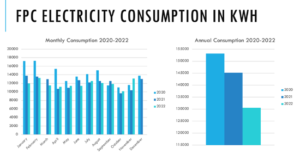

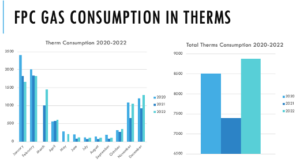
1kWh= 1.1.2pounds Coal or .08 gallons Petroleum
 Explore Appliances and Systems—Make a list of what appliances or systems in your church run off electricity (e.g., lighting, cooling, printers, AV, elevator, computers etc.)? What appliances or systems run off gas (heating, hot water, stove etc.)?
- Conduct an Energy Scavenger Hunt—Do a building walk through to list the different forms of energy. Look specifically at lighting, heating, and cooling, AV and technology, and kitchen appliances. This can be a fun activity for youth, sessions, and staff. Here’s a comprehensive energy scavenger hunt guide.
- Lighting—Look at all the different forms of lightening in and outside the building. Are lights regularly left on after hours or in unoccupied areas? Count light fixtures and note whether the bulbs are LED, fluorescent or incandescent?
- LED bulbs are by far the most energy efficient. For example, compared to fluorescents, LEDs are up to 80% more efficient. Unlike fluorescents, LEDs convert 95% of their energy into light and only 5% is wasted as heat. LEDs use far less power to provide a strong and consistent output at a lower wattage.
- Building Envelope, Doors & Windows—Look at buildings doors and windows to ensure tight seals and sufficient weather stripping. Check for cracks in windows, doors, or walls. Does it make sense to tint certain windows? Do exterior walls or the roof have sufficient insulation?
- Heating, Cooling and Hot Water—These areas can be costly energy sucks for congregations. How efficient are these systems and are they EnergyStar rated? Are heating and cooling systems being left on during unoccupied periods? How are the thermostats set and who regulates them? How old is the hot water heater, furnace, and cooling systems? Does the congregation have tankless water heating?
- Major Appliances—Is there an EnergyStar rating for major appliances (refrigerator, dishwasher etc.). Are appliances at a proper setting or temperature (refrigerator, freezer)? Are computers, printers, and AV systems regularly left on? Are there needs for upgrades?
- Lighting—Look at all the different forms of lightening in and outside the building. Are lights regularly left on after hours or in unoccupied areas? Count light fixtures and note whether the bulbs are LED, fluorescent or incandescent?
- Examine Building Use—When is the building most in use? Are there days or times when it would make sense to turn off appliances, lights or adjust heating and cooling systems? Who is responsible for shutting down lights and monitoring the heating and cooling systems?
- Learn More About Energy Audits with Free Videos and Resources–EnergyStar has a helpful websitefocused on helping congregations become more energy efficient as well as has provided this EnergyStar Action Workbook for Congregations.
- Consider a Professional Energy Audit-–Many power companies will provide your congregation with a free energy audit (PNM will do this). Your state energy office may also offer free or inexpensive energy audits. The National Association of State Energy Officials (NASEO) State and Territory Energy Officeshas an interactive map to highlight state energy offices. Additionally, certain faith-based nonprofit groups provide energy services for free or reasonable fees; ENERGY STAR has a listing of external faith-based stewardship organizations that may be able to help.
 Explore Appliances and Systems—Make a list of what appliances or systems in your church run off electricity (e.g., lighting, cooling, printers, AV, elevator, computers etc.)? What appliances or systems run off gas (heating, hot water, stove etc.)?
II. Transforming Congregations: Shifting Energy Culture and Behavior
- What education opportunities and awareness need to be brought to your congregation about your energy use? Are the staff, session, members, volunteers, or organizations that use the building aware of the congregation’s monthly and annual energy expenses and consumption? Are governing bodies aware of and budgeting for the rising cost of energy? Are there upcoming meetings or educational opportunities to talk about these issues? What changes in behavior (turning off lights, adjusting thermostats) need to occur to reduce energy? Who can make those changes?
- Tragedy of the Commons—Congregations often face a tragedy of the commons where many use the building’s energy and resources, but most fail to see the overall climate or fiscal impacts of this common use. In fact, most people are more knowledgeable about their home energy use and expenses than the energy use of their home congregation. This lack of awareness can lead to energy irresponsibility and loss of valuable financial resources that could be put to better use.
- Appoint Energy Czars—Having a person, a few key people or a committee regularly monitor the energy use of the building and make necessary adjustments can make a big difference. There are now free courses and certifications for facilities managers and building operators to create more energy efficient, comfortable, and environmentally friendly congregations.
III. Make Energy Reforms—There are various no cost or minimal cost reforms that congregations can make to become more energy efficient and climate smart. For example, education of the staff and congregation about the need to be more energy efficient and changing wasteful behaviors may make a huge difference. Below are some key reforms to help your congregation become more climate smart.
- Change All Light Bulbs to LEDs–Simply changing all lights inside and outside the building to LED bulbs can provide important energy and cost savings. Add “turn off the lights” stickers to key light switches throughout the congregation.
- New Seals and Weather Stripping—Make doors and windows more energy efficient and create a tighter seal for the building.
- Add Occupancy and Motion Light Sensors—a great way to ensure that lights don’t stay on in closets, restrooms, classrooms, and meeting rooms.
- Electric Tankless/On Demand Water Heaters or Put a Timer on Your Current Water Heater—Running a gas/electric hot water heater constantly can use lots of energy.
- Appliances and HVAC systems: Consider replacing older units with more energy efficient newer models. Have appliances serviced regularly.
- Take Advantage of Rebates—many counties, cities and states offer rebates for installing energy efficient appliances like washers, refrigerators, toilets, and thermostats.
- Take Advantage of Renovations by Adding New Insulation and Other Efficiencies—If your congregation is considering re-stuccoing, re-roofing, or other major building renovations, consider adding better R rated insulation and more energy efficient windows, doors, and appliances.
- Going Solar is Now More Affordable–Many congregations have shifted to solar energy. Adding solar to your building is now more affordable than ever. In the past, churches could not take advantage of tax rebates for solar because of their non-profit status. However, new federal legislation now allows the solar company your congregation hires to do the installation to get this rebate and pass this cost savings on to the congregation. Additionally, many congregations are surprised to learn that most solar panels do not need to be mounted directly to the roof of the congregation but are now mounted on brackets that are weighed down. Finally, new technologies allow your congregation to monitor solar production for each panel on your smart phone.
 IV. Become an Energy Star Congregation–By joining as a partner, your marketing efforts will pack an extra punch since your congregation can use the ENERGY STAR Partner logo in your marketing materials. Your congregation’s name and profile will be listed on the ENERGYSTAR website visible to thousands.
V. Being A Climate Smart Congregation Means Being a Water-Wise
A few simple and cost-efficient replacements can greatly reduce water usage for your congregation. Here are a few key reforms to help your congregation:
- Fix any leaks and replace dripping faucets
- Consider Water Wise Appliances
- Consider flow restrictors for bathroom faucets, installing waterless urinals, and low-flow toilets.
- Upgrade water fountains to include a reusable water bottle filling station.
- Since most hot water consumption happens only a few times a week, choose a tankless or on-demand water heater. This will help save electricity when hot water isn’t needed.
- Upgrade to EnergyStar dishwashers and washing machines to maximize energy and water savings. Only run the dishwasher or washing machine with full loads. Use cold or warm water settings instead of hot.
- Intentional Pot-Lucking–Consider using dishes, silverware, and cloth napkins more frequently at congregational meals and events. Single use paper napkins, plates, and disposable utensils require more water and resources to be created and shipped. Additionally, these objects last in our landfills for years.
- Landscaping and Irrigation–Examine landscaping and consider planting drought-resistant plants and trees. Many beautiful trees and plants thrive without irrigation. Choose indigenous plants that do not require much water and native plants beneficial to pollinators, wildlife. Become a Sacred Grounds Congregation. When you do water, consider collecting and using rainwater. Put a layer of mulch around plants to keep soil moist. Check irrigation systems every spring to ensure there are no leaks. An irrigation audit can be conducted to ensure you are watering at peak efficiency. Knowing when and how much to water allows you to keep a healthy congregational landscape.
VI. STRIVE TO BE A ZERO WASTE CONGREGATION
Overconsumption and a throwaway culture have led to a global waste crisis. While all trash is technically recyclable, many materials are not profitable to recycle. As a result, waste piles up in landfills and pollutes our planet all while new materials are extracted from the earth to create new products. These new products often require great amounts of packaging and shipping that further exacerbate climate change. The Five Rs are guiding principles for reducing the waste congregations and individuals produce.
Refuse: This principle tells us to refuse anything we don’t really need. Congregations are invited to intentionally reflect on their needs and limits. Some examples are single-use items like utensils, food, and drink containers. This is the first step to cutting down waste and is an important spiritual principal focused on self-awareness, limiting oneself and sacrifice.
Reduce: Choose to reduce waste by bringing your own water bottle and mug, using cloth napkins, tablecloths, dishes, and silverware instead of single use items.
Reuse: If we think creatively, many items can be repurposed. For example, old jars can be used as containers for other materials. Look for reuse companies like LOOP. Challenge companies to manufacture refillable versions of their conventional single-use items. Reuse means also that instead of tossing something we don’t need, if it’s in good condition, we can donate it. BuyNothing groups, Freecycle, Craigslist and thrift stores are great ways to donate items or find an item you may need.
Recycle: If unable to reuse items, consider how to recycle them so they can be converted into something new. While recycling is a way to extend the lifespan of a material, it still requires resources and energy. Most congregations have mastered basic curbside recycling of plastics, aluminum, and paper. Ask your congregation consider the next step by working with companies like Terracycle and Got Sneakers to recycle unconventional materials such as clothing, shoes, toys, food pouches, hygiene products and more.
Rot: Composting fruits, vegetables, and yard trimmings combats climate change on three critical fronts. First, by removing food waste from landfills, we reduce trash volume by about 40%, which extends landfill life and reduces heavy machinery required to handle material. Secondly, food waste in landfills is also a high producer of planet-warming methane gas. Finally, when the finished compost is spread and seeds are planted, the ability for that area to sequester carbon from the atmosphere into the soil is activated, thus offering the potential to reverse climate change. There are many options to compost food scraps, including compost bins, vermiculture, and curbside programs. Some cities have composting and others rely on organizations like Reunity Resources.
[1] Rebekah Simon-Peter, 7 Simple Steps To Green Your Church (Nashville: Abingdon, 2010), 10-11.